
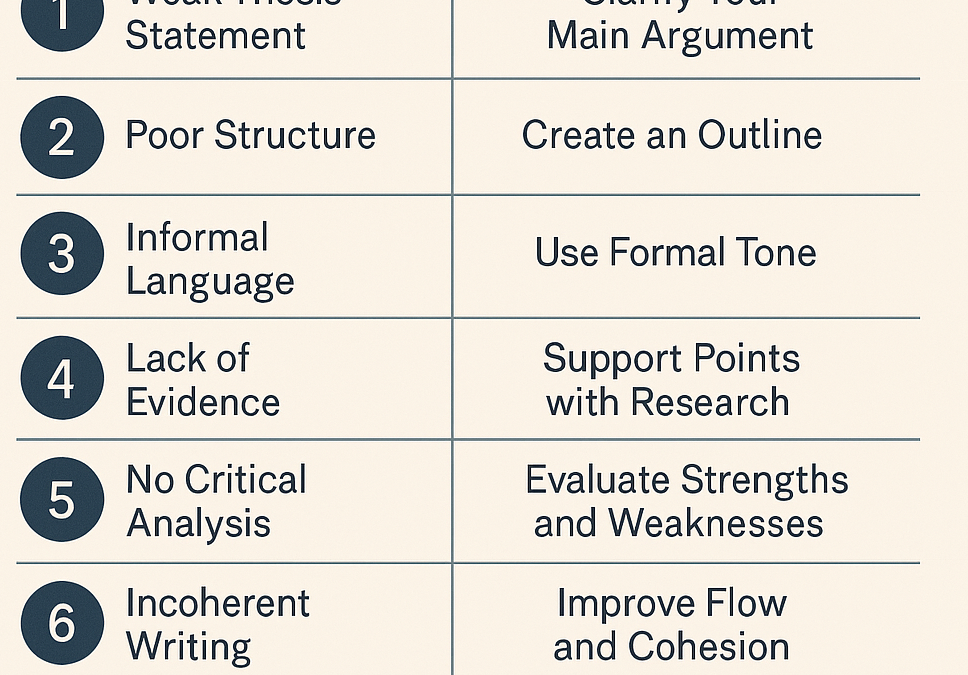
You spent two weeks on clinical placement watching real nurses save real lives. You came home exhausted, emotionally drained, and somehow still had a 2,500-word nursing essay due in 72 hours. You wrote it. You submitted it. You were proud of it.Then the grade came back: 52%.If you are searching for nursing essay writing help UK US students genuinely need, you are in exactly the right place. You are not failing because you lack intelligence or dedication. You are failing because nobody taught you the specific, unforgiving rules of nursing academic writing — rules that are completely different from any other subject you have ever studied.
Nursing essays do not just test what you know. They test whether you can translate clinical knowledge into evidence-based academic argument, whether you can connect theory to practice under pressure, and whether you understand the NHS frameworks and healthcare policies that underpin every patient interaction. Most nursing students are brilliant at the clinical side. The essay side is where grades collapse — and where the right nursing essay writing help UK US students can access makes an immediate, measurable difference.
This guide identifies the nine mistakes that appear most consistently in nursing student essays — mistakes that markers see every single semester — and gives you the precise fix for each one. By the end of this guide, you will know exactly what separates a 52% nursing essay from a 72% one, and what you can do about it starting today.
Why Nursing Essays Are So Much Harder Than Other Academic Writing
Before diving into the mistakes, it is worth acknowledging something most guides skip over: nursing essays are genuinely one of the most demanding forms of academic writing at undergraduate level, and students seeking nursing essay writing help UK US universities are dealing with a uniquely difficult combination of pressures.
A standard history or English essay asks you to analyse texts or events. A nursing essay asks you to simultaneously demonstrate clinical knowledge, apply nursing theory and models, cite peer-reviewed evidence from medical databases, engage with current NHS policy and NICE guidelines, write in formal academic register, and reflect on real patient care — all within a strict word count, often while completing 37.5-hour placement weeks.
Research shows that nursing students experience significant academic and clinical stress due to challenging coursework, assessments, and educational demands alongside the pressures of gaining practical healthcare experience. The combination of academic and clinical pressure creates a perfect storm for the essay mistakes below.
The good news: every single mistake on this list is fixable. Here is exactly how.
Mistake 1: Describing Patient Care Instead of Critically Analysing It
This is the single most devastating mistake in nursing essays and the primary reason students seeking nursing essay writing help UK US programmes require are consistently disappointed by their grades.
What description looks like:
“The nurse assessed the patient’s pain levels using the numerical rating scale. The nurse then administered pain medication as prescribed. This is important because managing pain is a key part of patient-centred care.”
This earns a passing grade at best. It tells the marker what happened. It does not tell them that you understand why.
What first-class nursing essay writing looks like:
“Pain assessment using validated tools such as the Numerical Rating Scale reflects the NMC’s (2018) requirement for evidence-based practice, yet limitations exist — the NRS relies on self-report and may be unreliable in cognitively impaired patients (Herr et al., 2019). This highlights the necessity of supplementing quantitative tools with holistic assessment, integrating behavioural indicators as outlined in the Abbey Pain Scale, particularly in dementia care settings (Abbey et al., 2004).”
The second version interrogates why, identifies limitations, connects to nursing frameworks, and demonstrates the critical analysis that earns 70%+.
The fix: Every time you make a statement about nursing practice, ask: “So what? Why does this matter? What are the limitations? What does the evidence say? What framework supports or challenges this?” If you cannot answer those questions, you are describing, not analysing.
Mistake 2: Ignoring the NMC Code, NICE Guidelines, and NHS Frameworks
UK students seeking nursing essay writing help UK tutors and markers consistently recommend one thing above all others: connect every argument to professional frameworks. US students need equivalent regulatory grounding. Yet this is one of the most consistently missed requirements.
Your arguments must be grounded in:
The NMC Code (2018) — Every argument about patient care, professional conduct, or clinical decision-making should reference the relevant section. Markers do not consider an essay complete without it.
NICE Guidelines — The National Institute for Health and Care Excellence publishes clinical guidance on everything from wound care to mental health. Citing the relevant NICE guideline when discussing clinical interventions is not optional — it is expected at every UK university.
NHS Long Term Plan — Policy essays and any discussion of service delivery should engage with current NHS strategic priorities.
Six Cs of Nursing — Care, Compassion, Competence, Communication, Courage, Commitment. These foundational values should appear in any essay about professional practice.
For US nursing students, the equivalent frameworks are the ANA Code of Ethics, Joint Commission standards, QSEN competencies, and relevant CDC and NIH clinical guidelines.
The fix: Before writing any section, ask which regulatory body, clinical guideline, or professional framework applies. Then cite it directly. Markers are looking for evidence that you understand the professional context you are entering.
Mistake 3: Using Outdated Evidence — The Five-Year Rule You Are Probably Breaking
Every student who has searched for nursing essay writing help UK universities offer will have been told: use current evidence. But what does “current” actually mean in nursing, and why does it matter so much?
Healthcare evidence has a strict currency requirement. Most UK nursing programmes require evidence published within the last five to ten years, with a strong preference for the last five. Clinical guidelines change, drug protocols update, and best practice evolves rapidly. A 2010 infection control study cited in a 2026 essay signals that you are not engaging with current evidence-based practice — one of the core competencies of a registered nurse.
The most common ways outdated evidence appears:
Using textbooks as your primary source. Textbooks are written two to three years before publication and used for a further five to ten years. A textbook published in 2020 may contain evidence from 2016. Textbooks provide context — journals provide current evidence.
Using Google Scholar as your only database. CINAHL, PubMed, the Cochrane Library, and NHS Evidence are where current nursing evidence lives. Google Scholar is a starting point, not a destination.
Citing secondary sources. Citing what one author says about another author’s findings is weaker than citing the original research directly.
The fix: Every peer-reviewed source should ideally be published within the last five years. For landmark studies or foundational theories — Maslow, Roper-Logan-Tierney, Orem’s Self-Care Model — older sources are acceptable, but balance them with current applications. Check every reference date before submitting.
Mistake 4: Weak Thesis Statements That Tell the Marker Nothing
Students who find the right nursing essay writing help UK US programmes recommend quickly discover that the introduction is not just pleasantries before the real essay begins. Your thesis is the central argument your entire essay will prove — and markers decide within the first paragraph whether you understand the topic.
A weak nursing essay thesis:
“This essay will discuss the importance of communication in nursing practice and how it affects patient outcomes.”
This describes a topic. It is not an argument. It demonstrates no critical thinking.
A strong nursing essay thesis:
“This essay argues that ineffective nurse-patient communication constitutes a primary driver of adverse clinical outcomes in UK acute care settings, with evidence demonstrating that communication failures contribute to 80% of serious healthcare errors (Joint Commission, 2023). Drawing on the NMC Code (2018) and Peplau’s Theory of Interpersonal Relations, this essay evaluates evidence-based communication strategies and their implementation within contemporary NHS practice.”
The second version commits to an argument, cites a striking statistic, references the frameworks the essay will use, and tells the marker exactly what to expect. It takes five minutes to write and transforms the marker’s perception of everything that follows.
The fix: Write your thesis statement last, after you have written the body of your essay. Never start with “This essay will discuss…” — start with your argument.
Mistake 5: Reflective Essays That Describe Feelings Without Demonstrating Learning
One of the most common reasons nursing students search for nursing essay writing help UK reflective assignments can be found for is that reflective writing is consistently misunderstood. Students write reflections that read like diary entries — emotional, descriptive, and personal — and receive poor grades because they missed the entire academic purpose.
Gibbs’ Reflective Cycle (1988) has six stages: Description, Feelings, Evaluation, Analysis, Conclusion, Action Plan. Most students spend 80% of their word count on Description and Feelings — the two least academically valued stages. Markers primarily want your Analysis, Conclusion, and Action Plan.
The mistake: “During my placement, I witnessed a patient become very distressed during a procedure. I felt anxious and unsure how to help. The nurse in charge handled the situation well and I observed her techniques.”
The correct approach: “Observing the patient’s acute distress response prompted reflection on the literature around procedural anxiety. Timmins and McCabe (2005) identify that nurses who lack confidence in managing patient distress may inadvertently escalate anxiety through non-verbal communication. My own response — physical withdrawal and reduced eye contact — aligns with this finding, suggesting that my non-verbal communication skills require development. Going forward, I will apply the SOLER framework (Egan, 2013) for therapeutic listening in my next placement, with specific attention to body positioning during procedural anxiety events.”
The fix: Apply the 30/70 rule. Spend no more than 30% of your word count on Description and Feelings combined. Spend the remaining 70% on Evaluation, Analysis, Conclusion, and Action Plan. This single ratio change will transform your reflective essay grades.
Mistake 6: Citation Errors That Signal You Have Not Read Your Sources
Proper citation is so central to nursing essay writing help UK and US nursing students need that most universities dedicate entire library sessions to it — yet citation errors remain among the top five reasons nursing students lose marks on otherwise well-argued assignments.
The most costly citation errors in nursing essays:
Citing a textbook when you mean a guideline. Writing “(NMC, 2018)” when you have not actually read the NMC Code and are citing a textbook’s summary of it. Markers check. They notice when your paraphrase does not match the actual document.
Missing in-text citations on statistics. Any specific number requires a citation. “80% of medication errors involve communication failures” without a citation is not a fact — it is an unsupported claim that immediately undermines your credibility.
Over-relying on one source. Citing the same source for every paragraph suggests you have not conducted genuine research. Aim for one to two peer-reviewed sources per 150 words.
Using non-academic sources. NHS patient leaflets, nursing.com, Wikipedia, and general health websites are not acceptable. CINAHL, PubMed, Cochrane, and peer-reviewed nursing journals are.
The fix: Every factual claim needs a citation from a peer-reviewed or official source published within the last five years. Download your university’s APA or Harvard referencing guide and verify generated citations against it — citation tools regularly produce formatting errors.
Mistake 7: Ignoring Patient Confidentiality in Case Study Essays
This mistake does not just cost marks. It can result in a failed assignment, a formal NMC fitness-to-practise concern, and serious consequences for your nursing registration before you have even qualified.
The NMC Code (2018) is explicit: nurses must maintain confidentiality as a fundamental professional obligation. When nursing essays include case studies from clinical placement, strict anonymisation is non-negotiable.
What anonymisation actually requires:
Changing the patient’s name is not enough. You must also change age (use a range: “a patient in their mid-sixties”), remove specific ward or location details, remove specific dates, alter specific diagnoses where they could identify the individual, and add a formal anonymisation statement.
The correct way to introduce a case study: “For the purposes of this essay, the patient will be referred to as ‘Mrs A’, and all identifying details have been altered in accordance with the NMC Code (2018) and the Data Protection Act (2018) to protect patient confidentiality.”
The fix: Include a clear anonymisation statement at the first mention of any patient. When in doubt about whether a detail is identifying, remove it entirely.
Mistake 8: Writing at the Wrong Academic Level for Your Year
The right nursing essay writing help UK Year 3 students need is fundamentally different from the support a Year 1 student requires — because the marking criteria shift dramatically between academic years, and many students do not realise it.
In Year 1, markers expect foundational knowledge, basic theoretical application, and developing critical analysis. In Year 3, the same topic requires sophisticated critical evaluation of competing evidence, integration of multiple theoretical frameworks, engagement with policy implications, and original synthesis of ideas.
Signs you are writing below your academic level:
You are summarising what researchers found rather than evaluating the quality of their evidence. You are using one theoretical model rather than comparing competing frameworks. Your arguments go in one direction without acknowledging counter-arguments. You have fewer than 15-20 sources in a 3,000-word third-year essay.
The fix: Before writing any nursing essay, read your module’s marking criteria — not the assignment brief, the actual marking criteria grid. Find the descriptor for the grade you want and use it as a writing checklist. Ask after every paragraph: does this demonstrate the level of analysis described in the 70%+ descriptors?
Mistake 9: Leaving the Essay to the Night Before
This is the mistake that enables all the other mistakes, and it is why so many nursing students search for nursing essay writing help UK US services the night before a deadline in a state of genuine panic.
Research shows that stress-induced exhaustion among nursing students is reported as moderately high, with academic demands, mental stamina, and sleep problems all significantly affected by the combined pressure of placement and academic work. Nursing students are not procrastinating out of laziness. They are exhausted from the combination of clinical placement hours, academic demands, and the emotional weight of healthcare environments.
The consequence is severe. Increased academic pressure is associated with reduced life satisfaction, which in turn is linked to high stress levels and increased intention to drop out — not due to lack of ability, but due to an unsustainable workload with no structured management strategy.
A realistic 10-day nursing essay timeline:
Days 1-2: Read the brief three times. Identify key question, required frameworks, and marking criteria. Search CINAHL and PubMed for 15-20 relevant sources.
Days 3-4: Read your sources. Highlight key evidence and statistics. Write your reference list as you go — never leave this until the end.
Days 5-6: Write a detailed outline. Draft your thesis statement. Plan each paragraph’s main argument and evidence.
Days 7-8: Write the first draft without editing as you go. A rough first draft beats a blank page every time.
Day 9: Revise for content. Check every paragraph connects to your thesis. Strengthen analysis. Add missing citations.
Day 10: Proofread for language, citation accuracy, anonymisation, and formatting. Read it aloud — this catches errors silent reading misses.
Ten days feels impossible on placement. But this investment produces grades that reflect your actual capability.
The Nursing Essay Checklist: Tick Every Box Before You Submit
Content and Argument:
- [ ] My thesis statement clearly states my central argument in the introduction
- [ ] Every paragraph has one main point supported by at least one cited source
- [ ] I am analysing and evaluating evidence, not just describing it
- [ ] I have connected arguments to NMC Code, NICE guidelines, or professional frameworks
- [ ] I have acknowledged counter-arguments and limitations
Evidence and Citations:
- [ ] Every factual claim has an in-text citation
- [ ] All sources are peer-reviewed or from official bodies (NMC, NICE, NHS, ANA)
- [ ] The majority of sources are published within the last five years
- [ ] I have used CINAHL, PubMed, or Cochrane — not just Google Scholar
- [ ] My reference list matches every in-text citation exactly
- [ ] My referencing follows APA 7th (US) or Harvard (UK) as specified
Reflective Essays Only:
- [ ] At least 70% of word count covers Evaluation, Analysis, Conclusion, and Action Plan
- [ ] I have applied Gibbs’ (or the specified) reflective framework consistently
- [ ] All patient details are anonymised with a confidentiality statement included
Professional Standards:
- [ ] NMC Code is referenced for any professional conduct arguments
- [ ] I am using British English spelling for UK submissions
- [ ] Word count is within 10% of the specified limit
Final Check:
- [ ] I have read the essay aloud to catch awkward phrasing and errors
- [ ] I have run a grammar and spell check
- [ ] I am confident this essay meets the 70%+ marking descriptors
When Nursing Essay Pressure Becomes Genuinely Overwhelming
The most honest thing any nursing essay writing help UK US service can tell you is this: you chose one of the hardest degrees available. You are simultaneously learning a profession, developing clinical skills, managing the emotional weight of healthcare environments, and producing university-level academic work. The pressure is real, and it is not weakness to need help.
If you are facing a nursing essay deadline with genuinely not enough time — because of placement demands, personal circumstances, illness, or accumulated workload — professional academic support exists and is used by thousands of UK and US nursing students every year.
At Keff Essays, our writers include experienced healthcare professionals and nursing academics who understand the NMC Code, NICE guidelines, NHS frameworks, Gibbs’ reflective cycle, and the specific demands of UK and US nursing programmes. We provide model nursing essays, research assistance, editing and proofreading, and structural guidance — all designed to help you learn from expert examples while managing the very real pressures of your programme.
📋 Need expert nursing essay writing help UK or US students can trust? → Get a confidential quote at keffessays.com
Free Resources Every Nursing Student Should Bookmark|nursing essay writing help UK US
The best nursing essay writing help UK and US students can access for free includes these authoritative resources:
NMC Code (2018) — nmc.org.uk — The professional standards document every UK nursing essay should reference. Read it. Know it.
NICE Guidelines — nice.org.uk — Searchable clinical guidance database. Find the guideline relevant to your essay topic and cite it directly.
CINAHL — Access free through your university library login. The gold standard database for nursing research.
Cochrane Library — cochranelibrary.com — Free systematic reviews and meta-analyses. The highest level of clinical evidence available.
PubMed — pubmed.ncbi.nlm.nih.gov — Free access to millions of peer-reviewed biomedical and nursing research articles.
Your University Academic Skills Centre — Every UK and US university has one. Free one-to-one essay support, writing workshops, and feedback on drafts. This resource is criminally underused by nursing students.
Frequently Asked Questions About Nursing Essay Writing help UK US
How long should a nursing essay introduction be? For a 2,000-word nursing essay, your introduction should be approximately 150-200 words. It should include a hook establishing topic significance, a brief context statement, your thesis, and a signpost sentence. Never use more than 10% of your total word count on the introduction.
Can I use first person in nursing essays? Reflective essays almost always permit or require first person. Academic argumentative essays at most UK universities require third person. Always check your module handbook. When in doubt, use third person.
What is the best nursing theory to use in essays? The right theory depends on your topic. Peplau’s Interpersonal Relations Theory suits communication essays. Roper-Logan-Tierney’s Activities of Living Model works for holistic care essays. Orem’s Self-Care Deficit Theory suits patient empowerment essays. Gibbs’ Reflective Cycle is for reflective pieces.
How many references does a nursing essay need? Approximately one to two peer-reviewed sources per 150 words of body content. A 2,000-word essay should have 12-18 references. A 3,000-word essay should have 18-25. These are minimums.
Do I need to use CINAHL or can I use Google Scholar? Google Scholar is a useful discovery tool, but access papers through your university’s CINAHL or PubMed subscriptions. Many healthcare papers are behind paywalls on Google Scholar but free through your university library portal.
What do nursing essay markers actually want to see? Clear argumentation grounded in a stated thesis, critical analysis rather than description, engagement with current peer-reviewed evidence, connection to professional frameworks, proper academic referencing, and writing that demonstrates you are developing the professional identity of a nurse — not just completing an academic exercise.
My nursing essay is due in 48 hours and I haven’t started — what do I do? Stop panicking and start with a plan. In the next two hours: read the brief carefully, search CINAHL for five to eight sources, write a rough thesis statement, and create a bullet-point outline. Then write continuously without editing. A rough complete draft beats a polished unfinished essay every time. If the situation is unmanageable, contact your personal tutor about an extension before the deadline — not after.
Where can I find trusted nursing essay writing help UK US students recommend? Start with your university’s free writing centre and academic skills services — these carry zero academic risk. If you need professional model essay support, Keff Essays provides nursing-specialist writers with healthcare backgrounds who understand both UK and US programme requirements. Visit keffessays.com for a confidential quote.
The Bottom Line: You Are Capable of Excellent Nursing Essays
The nine mistakes in this guide are not signs of academic inability. They are the entirely predictable result of nobody explaining the specific rules of nursing academic writing before you were expected to follow them.
Every mistake is fixable. The thesis statement mistake takes five minutes once you know what a strong one looks like. The framework mistake disappears the moment you start connecting every argument to the NMC Code. The reflective essay mistake transforms when you apply the 30/70 rule.
Students searching for nursing essay writing help UK US programmes can be proud of are often closer to excellent grades than they realise. The gap between 52% and 72% is not intelligence — it is knowing these nine rules and applying them consistently.
You chose nursing because you want to make a real difference to real people’s lives. The academic skills you develop writing these essays — critical analysis, evidence-based reasoning, professional framework application — are exactly the skills that will make you an outstanding nurse.
Get the writing right. The grades will follow.
🎓 Need Professional Nursing Essay Writing Help UK or US Students Trust?
At Keff Essays, our team includes nursing academics and healthcare professionals who understand the exact demands of UK and US nursing programmes — from the NMC Code to NICE guidelines, from Gibbs’ reflective cycle to APA 7th edition citations.
✅ Nursing specialists with real healthcare backgrounds ✅ 100% original model essays written from scratch ✅ UK and US university standards — we know the difference ✅ Turnitin-safe plagiarism reports included ✅ Unlimited revisions until you are satisfied ✅ Complete confidentiality guaranteed ✅ Delivery from 24 hours for urgent deadlines
Get a Confidential Nursing Essay Quote → keffessays.com
Published by Keff Essays — Trusted Academic Support Since 2012 Last Updated: February 2026 | Reading Time: 20 minutes Category: Nursing Essays, Academic Writing, Healthcare Students Tags: nursing essay writing help UK US, nursing assignment structure, healthcare essay tips, how to write a nursing essay, NMC Code nursing essay