

You’re staring at a blank screen. The word count reads zero. Your deadline is looming. Your chest is tight and your mind is racing. Sound familiar? If you’re dealing with dissertation stress, UK students — you are absolutely not alone.
According to the UK Office for National Statistics, 37% of students experienced moderate to severe symptoms of depression or anxiety — significantly higher than the general population. In a 2022 survey by the mental health charity Student Minds, 57% of students self-reported a mental health issue and 27% said they had a diagnosed mental health condition. And among all the pressures students face, the dissertation consistently ranks as one of the most overwhelming.
The good news? Dissertation stress UK students experience is completely manageable — with the right strategies. In this comprehensive guide, we’ll walk you through exactly how to tackle dissertation anxiety head-on, protect your mental health, and actually finish your dissertation feeling strong and confident.

Why Dissertation Stress Hits UK Students So Hard
Before we dive into solutions, it’s worth understanding exactly why dissertation stress UK students experience is so uniquely intense — and why it’s different from any other assignment you’ve faced.
It is the first time many students will have conducted research on their own, and without enough preparation it is very common to feel lost and overwhelmed. Given how much the dissertation relies on self-driven input with no official contact hours to rely on, knowing how to get started or how to keep going are almost impossible tasks.
Unlike regular essays or coursework, your dissertation:
- Counts for a huge portion of your final degree classification — often 20-40% of your final year mark
- Requires entirely self-directed work — no weekly lectures to keep you on track
- Spans months, not days or weeks — making it easy to procrastinate
- Demands original research — something most students have never attempted before
- Carries the weight of your entire academic career — the pressure can feel suffocating
Students report difficulties with academic demands and the pressure to get a high-class degree as a factor in mental health issues. Students who experience imposter syndrome or perfectionism are also more likely to develop mental health issues, including anxiety.
Add to this the financial pressures, living away from home, and the social pressures of final year — and it’s no wonder dissertation stress UK students face can spiral into genuine anxiety or depression if left unaddressed.
Feeling overwhelmed right now? You don’t have to struggle through this alone. Thousands of UK students every year get professional support from Keff Essays’ dissertation writing service — from help with individual chapters to full dissertation guidance. Get a free quote today and take the pressure off your shoulders.
Signs Your Dissertation Stress Has Become a Problem
Not all stress is bad. A healthy level of pressure can actually motivate you to do your best work. But dissertation stress UK students experience can sometimes cross the line into something more serious. Here’s how to tell the difference:
[Image: Checklist graphic showing warning signs of dissertation anxiety — Alt text: “signs dissertation stress is too much UK students mental health”]
Normal dissertation stress looks like:
- Feeling nervous before supervisor meetings
- Occasional moments of self-doubt
- Mild frustration when writing isn’t flowing
- Worrying about your grade
Concerning dissertation anxiety looks like:
- Complete paralysis when thinking about or starting research or writing — also manifesting as writer’s block, or feeling “stuck”
- Inability to sleep due to dissertation worries
- Physical symptoms: headaches, stomach problems, tension
- Avoiding working on your dissertation for days at a time
- Persistent feelings of hopelessness or worthlessness
- Withdrawing from friends, family, or social activities
- Difficulty concentrating on anything else
If you’re experiencing the warning signs above, please reach out to your university’s counselling service or contact Student Minds — the UK’s leading student mental health charity. Professional support can make an enormous difference.
Strategy 1: Break It Down Into Tiny, Manageable Pieces
The single most effective strategy for managing dissertation stress UK students struggle with is deceptively simple: stop seeing your dissertation as one enormous task and start seeing it as dozens of small, achievable ones.
[Image: Dissertation broken into small steps with checkboxes — Alt text: “breaking dissertation into manageable steps UK students stress”]
Starting your dissertation can be overwhelming — the thought of retrieving and analysing data AND writing about it can leave any student feeling intimidated. One way to help tackle this feeling is to break down the dissertation into smaller steps.
Here’s how to do this practically:
Create a Chapter-by-Chapter Breakdown
Instead of “write dissertation,” your to-do list should look like:
Week 1-2: Introduction
- Draft research question (Day 1)
- Write background context (Day 2-3)
- Draft aims and objectives (Day 4)
- Write rationale section (Day 5)
- Review and revise (Day 6-7)
Week 3-5: Literature Review
- Identify 10 key sources (Day 1-2)
- Create thematic categories (Day 3)
- Draft Theme 1 (Day 4-5)
- Draft Theme 2 (Day 6-7)
- (Continue section by section…)
Set Daily Word Count Targets
In your plan, include at the end of each week how many words you want to write, giving enough time to proofread and tweak where required.
A realistic daily target for most dissertations is 300-500 words per day — that’s just 2-3 focused paragraphs. Over 8 weeks, that’s 16,800-28,000 words — more than enough for most undergraduate dissertations.
Celebrate Small Wins
Every completed section, every chapter draft, every milestone deserves acknowledgment. Reward yourself after completing each task — whether that’s a coffee break, a walk, or an episode of your favourite show. These small celebrations reduce dissertation stress UK students accumulate and keep your motivation alive.
Pro tip: Use a visual progress tracker — a simple chart on your wall showing chapters completed can be incredibly motivating. Seeing your progress makes the dissertation feel achievable.
Strategy 2: Use the Pomodoro Technique to Beat Paralysis
One of the biggest contributors to dissertation stress UK students face is the dreaded blank screen — that paralysing moment where you simply cannot make yourself start writing.
The Pomodoro Technique is a remarkably effective fix.
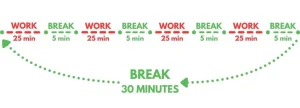
Use the Pomodoro Method where you have a focus block for 25/50 minutes (depending on your preference) and then have a 5/10-minute break. After having done a few work blocks like this, you would be surprised at how much you can get done.
How to use Pomodoro for your dissertation:
- Set a timer for 25 minutes (use Pomofocus.io — free and simple)
- Work on ONE task only — no phone, no social media, just writing
- When the timer rings, stop — even if you’re mid-sentence
- Take a 5-minute break — walk around, stretch, get water
- Repeat 4 times — then take a longer 20-30 minute break
Why this works so well for dissertation stress: The 25-minute blocks feel non-threatening. You’re not committing to hours of painful writing — just 25 minutes. Once you start, momentum builds and the anxiety reduces dramatically.
Most students find they produce 200-400 words per Pomodoro once they get into flow — meaning 4 Pomodoros (2 hours total, including breaks) can yield 800-1,600 words per session.
Strategy 3: Work Smarter, Not Harder
A common mistake that amplifies dissertation stress UK students experience is confusing hours spent with actual progress. Sitting at your desk for 8 hours feeling stressed is not productive — it’s counterproductive.

Working hard isn’t always working smart. So, if you’ve found yourself sitting at your desk for hours on end yet not achieving anything, it’s a waste of your time. Rather than working all the hours and running yourself into the ground, switch your mindset to working smarter, not harder.
Here’s what working smarter on your dissertation actually looks like:
Know Your Peak Hours
Are you a morning person or a night owl? Work on your most challenging dissertation tasks (writing, analysis, critical argument) during your peak cognitive hours. Save admin tasks (formatting, referencing, bibliography) for your lower-energy periods.
Embrace “Good Enough” First Drafts
Perfectionism is one of the biggest drivers of dissertation stress UK students face. Try to release the expectation of producing a flawless piece on the first attempt. Instead, consider free writing: record raw ideas onto the page without worrying about citations or polished phrasing. Think of your first draft as a brainstorming session, not a final product.
Your first draft doesn’t need to be good. It needs to exist. You can fix a bad draft — you can’t fix a blank page.
Use Your Supervisor Strategically
Make use of your supervisor! Arrange meetings with them and ask them for advice, as well as your peers! You are all going through the same process so some friendly support can go a long way.
Many students waste hours going in the wrong direction because they’re too anxious to contact their supervisor. Send that email. Book that meeting. Your supervisor is there to guide you — use them.
Set Hard Stop Times
Decide in advance when you’ll stop working each day — and stick to it. Your dissertation is marked on quality, not the number of hours you spend on it. Working smarter, not harder, allows time for breaks and well-deserved rest.
Working with a fixed end time forces you to be more focused during your work sessions and protects your mental health.
Struggling to make progress despite your best efforts? Sometimes the most productive thing you can do is get expert support. Our dissertation writing service can help you with specific chapters, structural guidance, or even a complete dissertation draft — written to your university’s exact requirements. See how we can help and reclaim your time.
Strategy 4: Build Your Support Network
Isolation dramatically worsens dissertation stress. UK students who try to struggle through alone consistently have worse experiences than those who build a strong support network around them.

Find an Accountability Partner
Buddy up with a classmate to commit to a writing goal, and every day, call or text each other your word count for the day. Tell your partner, friend, or family member about a daily or weekly goal, and have them call you regularly to get updates.
An accountability buddy changes everything. Knowing someone else is checking in on your progress makes it much harder to procrastinate, and sharing the struggle with someone in the same boat is genuinely comforting.
Communicate With Your Supervisor Regularly
Don’t wait until you have something “perfect” to show your supervisor. Regular check-ins — even brief email updates — keep you on track and ensure you haven’t gone in the wrong direction.
Talk to Your Friends and Family
If you’re struggling with your dissertation for any reason, don’t be afraid to lean on your support network. Remember, there are people on hand to help you, so you don’t have to struggle in silence.
You don’t need to explain the technical details of your research to them — just having someone listen to how you’re feeling can significantly reduce anxiety levels.
Join Online Communities
- r/UniUK on Reddit has thousands of UK final-year students going through the same experience
- The Student Room dissertation forums are full of students sharing tips and encouragement
- Your university’s dissertation support groups — check your VLE or university website
Strategy 5: Protect Your Physical Health
This might seem obvious, but it’s one of the most neglected strategies for managing dissertation stress UK students overlook when deadlines loom. Your physical health directly impacts your mental wellbeing and cognitive performance.

Exercise — Even Briefly
Exercise helps release endorphins, a natural mood-booster. It also helps build immunity and relieve tension and stress. You don’t have to be a marathon runner — even a 30-minute walk each day is beneficial for your health and can be a refreshing break after sitting in front of the computer.
During dissertation season, even a 20-minute walk can dramatically reduce cortisol (the stress hormone) levels and improve your ability to focus when you return to your desk.
Protect Your Sleep
Sleep deprivation is catastrophic for cognitive function — exactly what you need most when writing a dissertation. Aim for 7-8 hours every night. If dissertation anxiety is keeping you awake, try:
- Setting a “device off” rule 1 hour before bed
- Writing tomorrow’s task list before sleeping (offloads mental load)
- Using Headspace or Calm for sleep meditations
Eat Properly
When we’re in a time crunch or under stress, it’s natural to grab quick snacks full of sugar or carbs or turn to comfort food. Sugar and caffeine can lead to crashes (both physical and mental), leaving you more depleted than before. Make sure your diet has protein in it, even if it’s a few handfuls of nuts as a snack, peanut butter on a banana, or chickpeas in a salad.
Proper nutrition during dissertation season isn’t about dieting — it’s about giving your brain the fuel it needs to think clearly and manage stress effectively.
Strategy 6: Practise Mindfulness and Stress Relief
Managing dissertation stress UK students experience isn’t just about working more efficiently — it’s also about actively calming your nervous system when anxiety spikes.

Try Mindfulness Meditation
Mindfulness and meditation are powerful stress relief activities that can help calm your mind during overwhelming periods. Apps like Headspace or Calm offer guided meditations specifically designed for students. Just 5-10 minutes of mindfulness practice daily can help reduce student stress and anxiety levels.
You don’t need to be spiritual or experienced to benefit from mindfulness. Simply sitting quietly, focusing on your breathing for 5-10 minutes, has been proven to reduce cortisol levels and anxiety symptoms.
Take Genuine Breaks
Your brain and body need to be recharged, so aim to take a 20 to 30-minute break every three hours. Go for a walk, do some window shopping, meet a friend for coffee — anything to avoid being isolated.
Breaks aren’t laziness — they’re neuroscience. Your brain consolidates learning and recovers cognitive resources during rest. Students who take regular breaks consistently outperform those who don’t.
Set Boundaries With Your Dissertation
Learning how to reduce stress involves setting healthy boundaries with your time and energy. It’s okay to say no to social events or extra commitments when you’re feeling overwhelmed.
But equally, you should also say yes to social activities regularly. Complete isolation during dissertation season is a recipe for severe anxiety. Allow yourself to enjoy life — you’ll return to your dissertation feeling refreshed, not guilty.
Manage Perfectionism
When writing your dissertation, perfectionism could often be the enemy of progress. Try to reframe your mindset from “I have to finish this chapter” to “I want to explore this idea.”
Remember: the purpose of the dissertation is not to “reinvent the wheel” — it is simply just another essay we need to produce to get our degrees, albeit one that is a bit longer in length than usual.
Strategy 7: Know When to Ask for Professional Help
This is perhaps the most important strategy for handling serious dissertation stress UK students face. There is absolutely no shame in asking for help — in fact, it’s one of the strongest things you can do.

When to Contact Your University Counselling Service
If dissertation anxiety is:
- Significantly interfering with your ability to work
- Affecting your sleep, appetite, or relationships
- Causing persistent feelings of hopelessness
- Leading to thoughts of self-harm or quitting your degree
Please reach out immediately. All UK universities provide free counselling services for students. You can find yours through your university’s student services page.
Request a Deadline Extension
If your dissertation stress UK circumstances have become genuinely unmanageable — whether due to mental health, personal emergencies, or other serious issues — you may be eligible for an extension or extenuating circumstances consideration. Contact your department’s student support team.
Use Professional Academic Support
Sometimes the most practical way to reduce dissertation stress is to get expert academic help. Whether you need help structuring your literature review, developing your methodology, or polishing your final draft, Keff Essays’ professional dissertation service provides confidential, expert support tailored specifically to UK university standards.
Our dissertation specialists have helped thousands of UK students complete their dissertations to a high standard — on time and without the overwhelming stress. Get your free dissertation quote here.
UK University Resources for Dissertation Support
Every UK student has access to a wealth of free support resources. Here’s a comprehensive list you should bookmark:
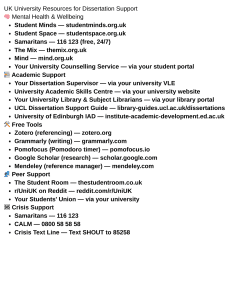
Mental Health and Wellbeing
- Student Minds — UK’s leading student mental health charity
- Student Space — Dedicated mental health platform for students
- Samaritans: Call 116 123 (free, 24/7) — for moments of crisis
- Your university counselling service — Book through your student portal
Academic Support
- Your dissertation supervisor — Meet regularly, not just when things go wrong
- Your university library — Subject librarians can help with research
- Academic skills workshops — Most universities offer dissertation-specific sessions
- Grammarly — For proofreading and writing clarity
- Zotero — Free reference management software
Your Dissertation Stress Survival Checklist
Use this weekly checklist to stay on top of your dissertation and your wellbeing:
Academic:
- [ ] Met my daily word count target
- [ ] Completed at least one Pomodoro session
- [ ] Reviewed and cited sources properly
- [ ] Checked in with accountability buddy
- [ ] Sent progress update to supervisor (weekly)
Wellbeing:
- [ ] Slept 7-8 hours each night
- [ ] Exercised at least 20 minutes
- [ ] Ate proper meals (not just coffee and biscuits!)
- [ ] Took at least one genuine social break
- [ ] Practised 5-10 minutes of mindfulness
🎓 Overwhelmed? Keff Essays Has Your Back
Managing dissertation stress UK students experience is hard enough — you shouldn’t have to do it entirely alone. At Keff Essays, we’ve supported thousands of UK students through their most stressful academic moments, and we’re ready to support you too.
How We Help UK Dissertation Students:
✅ Full Dissertation Writing — We write your complete dissertation to your exact specifications and UK university standards
✅ Chapter-by-Chapter Help — Struggling with just your literature review or methodology? We write individual chapters
✅ Dissertation Editing & Proofreading — Your work, polished to first-class standard
✅ Research & Outline Support — We help you structure your argument and find the best sources
✅ Urgent Turnaround — Deadline in 48 hours? We’ve done it before, and we can do it again
Why UK Students Trust Keff Essays:
- 🎓 All writers hold UK university degrees (many at Master’s and PhD level)
- 📋 Work is tailored to your exact brief, marking criteria and university guidelines
- 🔒 100% confidential — your university will never know
- ✅ Plagiarism-free with Turnitin report included
- 💰 Money-back guarantee if you’re not satisfied
Student Testimonials:
“I was absolutely drowning in dissertation stress. Keff Essays helped me with my methodology chapter and it completely transformed my confidence. I ended up with a 2:1!” — Sarah, University of Manchester
“Couldn’t have finished my dissertation without their support. Fast, professional and exactly what my tutors were looking for.” — James, UCL
📝 Get Your Free Dissertation Quote Now | 📚 View Our Dissertation Service | 💬 Chat With Us Now
Frequently Asked Questions
Is it normal to feel extreme stress during dissertation season?
Absolutely. Dissertation stress is one of the most universally reported experiences among UK final-year students. Research shows that a YouGov survey of Britain’s students found that 27% of students report having a mental health problem, with 74% reporting anxiety-related problems. You are far from alone — and the good news is that the strategies in this guide have helped thousands of students manage dissertation stress UK-wide and come through the other side successfully.
How do I stop procrastinating on my dissertation?
Procrastination is almost always driven by anxiety, not laziness. The most effective solutions for dissertation stress UK students use to combat procrastination are: breaking your work into 25-minute Pomodoro sessions, setting tiny daily targets (even 200 words counts!), and working at your peak energy time. If procrastination is severe, speak to your university’s counselling service — it may indicate deeper anxiety that needs professional support.
What should I do if I’ve fallen dangerously behind on my dissertation?
First, don’t panic. Contact your supervisor immediately and explain your situation honestly. Most universities have extenuating circumstances procedures for students who are significantly behind due to mental health or personal crises. If you need urgent academic support, Keff Essays offers a 24-48 hour dissertation service that has helped many students in exactly this situation.
How many words should I write per day for my dissertation?
A sustainable daily target is 300-500 words on writing days. This might sound low, but consistently hitting 400 words per day over 10 weeks gives you 28,000 words — far more than enough for most UK undergraduate dissertations. Quality matters more than quantity. Not every day needs to be a writing day — some days are for research, analysis, or editing.
Can dissertation stress make me physically ill?
Yes. Chronic stress has well-documented physical effects including headaches, digestive problems, disrupted sleep, weakened immunity, and muscle tension. If you’re experiencing significant physical symptoms alongside dissertation anxiety, please visit your GP or university health service. Managing dissertation stress UK students face is as much about your physical health as your academic performance.
What if I think my dissertation isn’t good enough?
If stress feels unmanageable, contact your university’s counselling and mental health service — they are there to help students navigate academic pressure. Remember that done is better than perfect. Every year, thousands of students submit dissertations they feel uncertain about — and pass. Your markers understand the challenges of the process. If you’re genuinely concerned about quality, our dissertation editing and proofreading service can review your work and give you honest, expert feedback before submission.
Is using a dissertation writing service cheating?
Using a professional writing service like Keff Essays is legal in the UK. Our work is provided as a model and reference resource — exactly how you might use any tutoring or academic support service. Thousands of UK students use professional writing support every year to help them understand what excellent work looks like, get support with challenging sections, and manage overwhelming workloads. Our service is 100% confidential and designed to support your academic success.
Article Published by: Keff Essays — Professional Academic Writing Service Last Updated: February 2026 Reading Time: 15 minutes Category: Student Wellbeing, Dissertation Writing Tips, UK University Guides Tags: #DissertationStress #UKStudents #DissertationHelp #StudentMentalHealth #UniversityLife #FinalYear #DissertationTips